Skip to content
The Official Blog The Official Blog
  • Home
  • About AlertBot
  • Home
  • About AlertBot
  • FaceBook
  • X
  • Instagram
  • LinkedIn
Free Trial
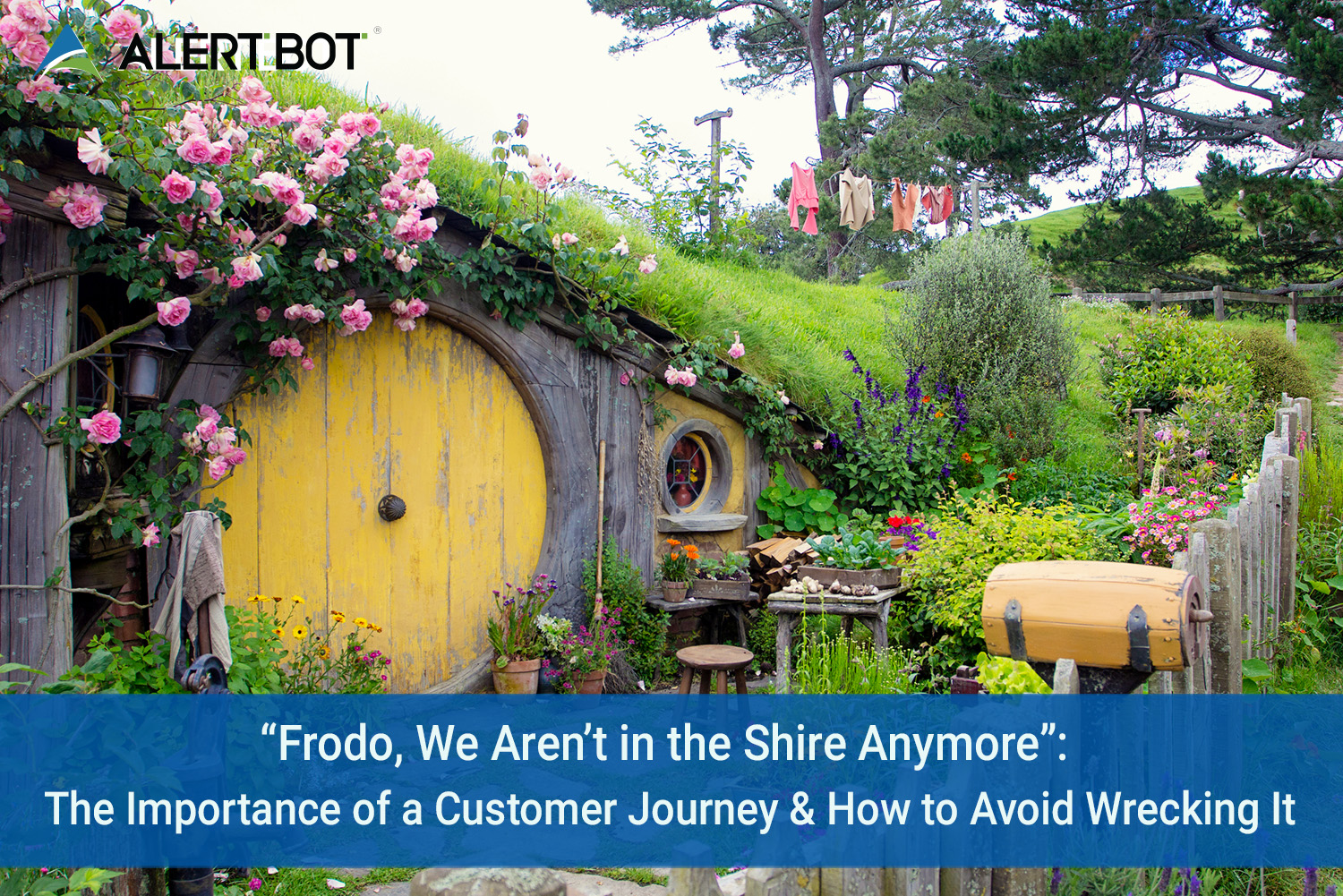
An image of the Shire film set from Lord of the Rings that shows Bilbo's home's front door. Text on the image reads “Frodo, We Aren’t in the Shire Anymore” - The Importance of a Customer Journey & How to Avoid Wrecking It
Real Browser Website MonitoringUptime MonitoringWeb Performance Tips

“Frodo, We Aren’t in the Shire Anymore”: The Importance of a Customer Journey & How to Avoid Wrecking It

By AlertBot
July 29, 2021 3 Min Read
Comments Off on “Frodo, We Aren’t in the Shire Anymore”: The Importance of a Customer Journey & How to Avoid Wrecking It

An image of the Shire film set from Lord of the Rings that shows Bilbo's home's front door. Text on the image reads “Frodo, We Aren’t in the Shire Anymore” - The Importance of a Customer Journey & How to Avoid Wrecking It

“Frodo, We Aren’t in the Shire Anymore”: The Importance of a Customer Journey & How to Avoid Wrecking It

by Louis Kingston

Fans of Lord of the Rings — otherwise known as “Ringers” — never grow weary of reading or watching Frodo and his fellow Hobbits journey through Middle Earth on an epic quest to Mordor (where rumor has it there now exists a very stylish Starbucks at the base of Mount Doom).

Well, customers who visit a website are on an important journey as well. Granted, it doesn’t involve saving the world from evil entities that never sleep.  But it does involve achieving objectives that, ultimately, culminate in a sale — whether that happens on the same visit (e-commerce) or weeks down the road (B2B). And that brings us to the customer journey map.

The customer journey map is a visual tool that enables businesses to identify where, when and how customers engage their brand — and make the trek from curious prospects to enthusiastic brand ambassadors. There are five phases on the journey:

  1. Awareness: customers in this phase know that they have a problem (although they may not yet know the full scope or severity of the problem), and they are in the process of conducting research. It is possible for visitors to go straight into a conversation via phone, video or chat. However, research has found that, on average, customers access 3-5 pieces of content before speaking (or texting) with a sales rep. This content can include videos, articles, ebooks, white papers, checklists, and so on.
  2. Evaluation: customers in this phase are aware of their problem and are comparing different options. Content such as case studies, testimonials and demos are highly influential here. However, nothing beats a free trial.
  3. Decision: customers in this phase have put together a shortlist (in a formal manner as is usually the case with B2B sales, or more casually as is often the case with B2C/e-commerce sales) and are ready to make a decision.
  1. Retention: customers in this phase have made a purchase, and now the goal is to keep them on the roster. The importance of retention cannot be overestimated. It costs 5x more to acquire a new customer than it does to nurture an existing customer, and increasing retention by just 5% can boost profits by 25-95%. Tactics that can help foster a strong, loyal relationship include special offers, follow-up outreach (via email, app, phone, video, or in-person for B2B), customer satisfaction surveys, etc.
  1. Advocacy: customers in this phase are happy and willing to recommend a company to their professional and personal network, as well as members of their various social media communities (e.g. Facebook and LinkedIn groups, etc.). Research has found that 83% of B2C customers and 99% of B2B customers are influenced by various types of word-of-mouth marketing.

In theory, the customer journey is straightforward. However, in practice — and just as Frodo & Co. discovered — the quest can have many twists and turns. No, there aren’t any orcs, hobgoblins or balrogs along the way, but there are some dangerous foes that include:

  • Crashed pages/websites
  • HTTPS errors
  • Broken links
  • API problems
  • Dysfunctional scripts and forms
  • Browser incompatibility issues
  • S-l-o-w page loading

The bad news? Any one of these is enough to send customers heading straight for the exit, never to return. The good news? AlertBot’s leading solution continuously monitors for ALL of these from multiple locations around the world — and proactively notifies key individuals (e.g. CIOs, CTOs, SysAdmins, etc.) when a problem occurs.

You could say that AlertBot is leading-edge technology worthy of Gandalf, and yet so intuitive and easy-to-use that Pippin Took could manage everything (even after having a few pints at the Prancing Pony).

See for yourself by starting your free trial of AlertBot now.   

Louis is a writer, author, and avid film fan. He has been writing professionally for tech blogs and local organizations for over a decade. Louis currently resides in Allentown, PA, with his wife and German Shepherd Einstein, where he writes articles for InfoGenius, Inc, and overthinks the mythos of his favorite fandoms.


Tags:

bagginscustomer experiencecustomer journeyfeaturefrodojourney monitoringLord of the Ringsmordorshireweb performance
Author

AlertBot

Follow Me
Other Articles
A pretty girl with brown hair up in a bun looks intently at a laptop with her hand to her chin in a pensive manner.
Previous

Debunking 3 Website Availability Monitoring Myths

A man in a rose colored polo shirt leaning over with his hand on a fire alarm, about to depress the button.
Next

What Exactly is a Website Monitoring “False Alarm” and Why You Should Care About It

Recent Posts

  • Unpacking the Elements of Site Uptime (by way of Jeopardy!)
  • API Monitoring Basics
  • Reality Bites: 7 Key Disadvantages of Real User Monitoring
  • 100% Solutions, Zero Snark: What Makes AlertBot Customer Support Superior
  • Synthetic Monitoring: Frequently Asked Questions

Recent Comments

No comments to show.

Archives

  • October 2025
  • August 2025
  • May 2025
  • April 2025
  • March 2025
  • November 2024
  • August 2024
  • April 2024
  • February 2024
  • January 2024
  • November 2023
  • October 2023
  • August 2023
  • July 2023
  • March 2023
  • February 2023
  • January 2023
  • December 2022
  • September 2022
  • August 2022
  • June 2022
  • April 2022
  • February 2022
  • December 2021
  • November 2021
  • September 2021
  • July 2021
  • May 2021
  • April 2021
  • February 2021
  • January 2021
  • December 2020
  • October 2020
  • August 2020
  • June 2020
  • April 2020
  • March 2020
  • February 2020
  • January 2020
  • November 2019
  • October 2019
  • September 2019
  • July 2019
  • June 2019
  • March 2019
  • January 2019
  • November 2018
  • October 2018
  • August 2018
  • June 2018
  • May 2018
  • April 2018
  • February 2018
  • January 2018
  • November 2017
  • October 2017
  • August 2017
  • July 2017
  • May 2017
  • April 2017
  • March 2017
  • February 2017
  • January 2017
  • December 2016
  • November 2016
  • September 2016
  • June 2016
  • May 2016
  • April 2016
  • March 2016
  • February 2016
  • January 2016
  • December 2015
  • November 2015
  • September 2015
  • August 2015
  • July 2015
  • June 2015
  • April 2015
  • March 2015
  • February 2015
  • September 2014
  • August 2014
  • May 2014

Categories

  • AlertBot Features
  • API Monitoring
  • Ecommerce Performance
  • Events
  • Industry Chatter
  • Real Browser Website Monitoring
  • Reports
  • SEO
  • Uptime Monitoring
  • Web Performance Tips
  • Website Showdowns

You May Have Missed

Real Browser Website Monitoring Uptime Monitoring

Unpacking the Elements of Site Uptime (by way of Jeopardy!)

AlertBot
By AlertBot
October 23, 2025
AlertBot Features API Monitoring Uptime Monitoring

API Monitoring Basics

AlertBot
By AlertBot
August 26, 2025
Real Browser Website Monitoring SEO Uptime Monitoring Web Performance Tips

Reality Bites: 7 Key Disadvantages of Real User Monitoring

AlertBot
By AlertBot
May 13, 2025
AlertBot Features Real Browser Website Monitoring Uptime Monitoring

100% Solutions, Zero Snark: What Makes AlertBot Customer Support Superior

AlertBot
By AlertBot
April 15, 2025
Synthetic Monitoring: Frequently Asked Questions title graphic illustration of a laptop and scientists checking graphs and charts
Real Browser Website Monitoring Uptime Monitoring

Synthetic Monitoring: Frequently Asked Questions

AlertBot
By AlertBot
March 5, 2025
Real Browser Website Monitoring Uptime Monitoring Web Performance Tips

Synthetic Website Monitoring Best Practices

AlertBot
By AlertBot
November 19, 2024
Real Browser Website Monitoring Uptime Monitoring Web Performance Tips

Three Advanced Notification Features that Your Site Uptime Monitoring Vendor MUST Deliver

AlertBot
By AlertBot
August 29, 2024
SEO Uptime Monitoring Web Performance Tips

3 Ways Site Uptime Monitoring Boosts SEO

AlertBot
By AlertBot
April 30, 2024
Graphic of a computer monitor with a frown face on the screen and x's for eyes. Clouds and spots float around, an exclamation point triangle alert symbol shows next to the monitor.
Web Performance Tips

What is a HTTP 500 Error & How Can You Fix It?

AlertBot
By AlertBot
February 15, 2024
Copyright 2026 — The Official Blog. All rights reserved. Blogsy WordPress Theme