Unpacking the Elements of Site Uptime (by way of Jeopardy!)


Unpacking the Elements of Site Uptime (by way of Jeopardy!)
Picture this: you’ve achieved your second lifelong dream of being a contestant on Jeopardy! Now it’s time for the fateful “final answer.”
The good news? You’ve got a comfortable lead over your fellow contestants, and a correct response means eternal bragging rights.
The bad news? Miss this one, and everyone — your family, coworkers, dentist, mechanic — will remind you of it forever.
The lights dim. The audience holds its breath. The final answer appears:
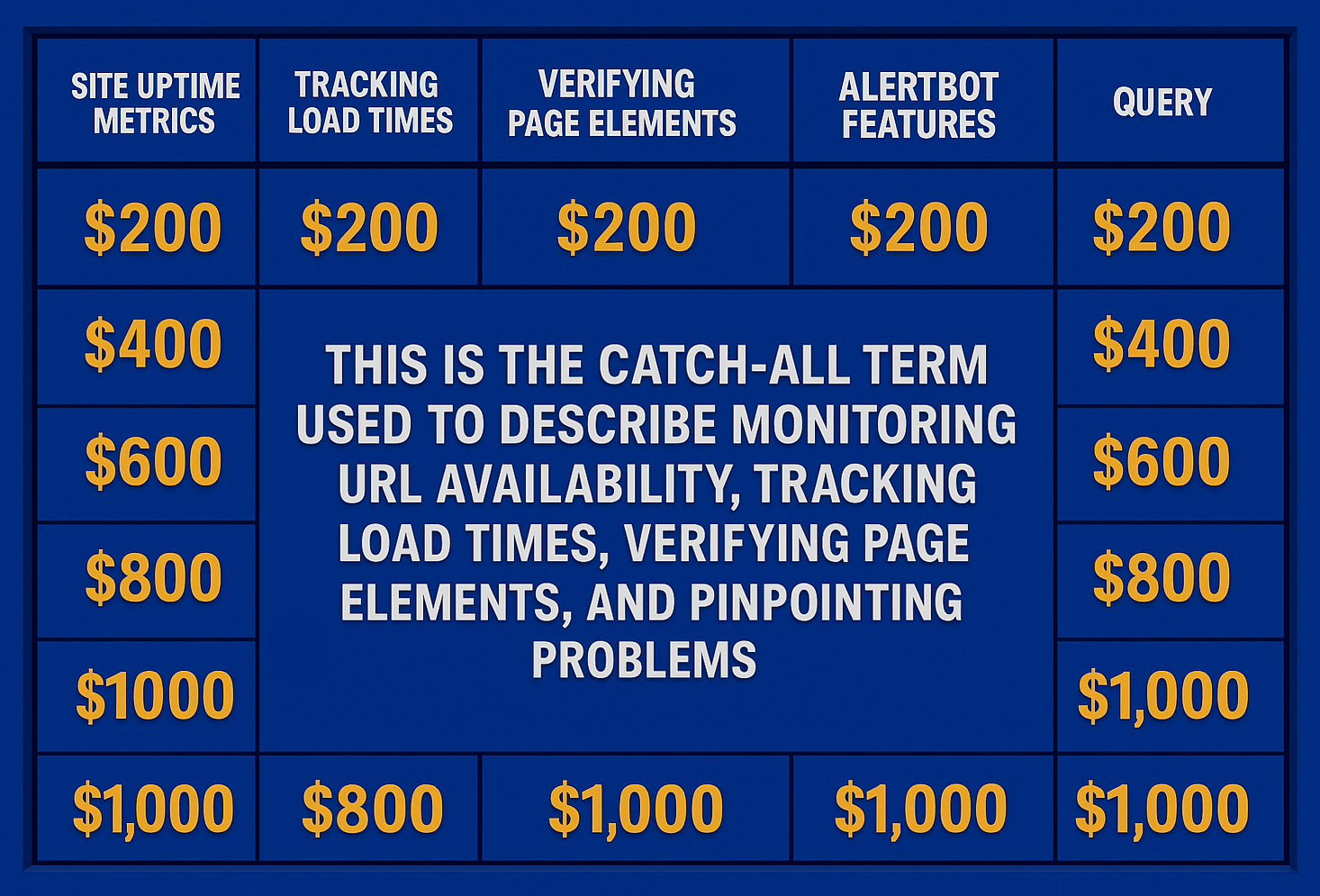
“This is the catch-all term used to describe monitoring URL availability, tracking load times, verifying page elements, and pinpointing problems.”
The contestant to your left groans. The one to your right freezes like a Buckingham Palace guard. You, however, calmly write down your response, so fast a little smoke drifts from your fingertips:
“What is website uptime monitoring?”
The crowd erupts. You win big. Fame, glory… and maybe that long-dreamed-of RV.
Then your alarm clock goes off.
So, no RV — and those overdue library fines remain — but you’ve woken up knowing something valuable: what comprehensive website uptime monitoring actually means.
Why It Matters
Many uptime monitoring tools — especially free ones — only check whether a site is up or down. But as your Jeopardy-inspired dream revealed, true website uptime monitoring goes much deeper. It includes:
- Tracking Load Times:
Slow-loading sites frustrate users and hurt conversions. Google also factors site speed and responsiveness into its search rankings, so a sluggish site can drag down visibility and traffic. - Verifying Page Elements:
Modern websites aren’t just static pages — they’re complex mini-apps with scripts, APIs, and interactive features. If a critical element fails to load, the visitor’s experience (and trust) takes a hit. - Pinpointing Problems:
Finding what’s broken shouldn’t feel like hunting for a needle in a haystack. Advanced monitoring tools highlight exactly where issues occur — whether it’s a timeout, script error, or third-party slowdown — so your team can fix it fast. - Monitoring URL Availability:
The foundation of all uptime monitoring — confirming that your site responds as expected, from multiple locations around the world, 24/7.
Putting It All Together
Now that you know the elements of true uptime monitoring — availability checks, load time tracking, page verification, and issue diagnosis — you can choose a solution that covers every angle.
AlertBot, for instance, provides all of these capabilities in one comprehensive platform. It monitors full page loads, validates key site elements, alerts you the moment something goes wrong, and delivers detailed diagnostics to speed up resolution.
No, it’s not quite as exciting as winning on Jeopardy! (and showing your high-school crush what they missed). But when you consider the massive costs of downtime, slow performance, or broken functionality, reliable uptime monitoring is the real prize.
Instead of lying awake worrying about your site, you’ll sleep soundly — dreaming of your next game show conquest. (The Price Is Right, anyone?)