
Synthetic Monitoring for SaaS: Keeping a finger on the pulse of your cloud app


Synthetic Monitoring for SaaS
Keeping a finger on the pulse of your cloud app
by Penny Hoelscher
Congratulations, you have just leveraged an awesome Software as a Solution (SaaS) service for your organization. Perhaps you have implemented a popular application – like Office 365, SalesForce or Dropbox – to support your staff and enhance collaboration between teams. Now you need to ensure that your employees and / or customers are happy too.
At this point, a common misconception often arises: the belief that a SaaS application relieves businesses of all responsibility for monitoring the application. It is just a matter of time before your business is rudely awakened to reality when customers start complaining about outages or poor performance on social media, and overloading the support desk with calls.
A negative customer experience when utilizing one of your SaaS applications can affect your bottom line. Unfortunately, you cannot totally rely on your provider to keep the system ticking; even the big guys experience outages and cyber attacks. Synthetic monitoring provides a solution, a way for you to keep your finger on the pulse of your cloud services.
Taking responsibility for SaaS applications
Effective SaaS monitoring is measured by how positive the end-user experience is. For instance, if a user cannot log in to an application to retrieve a file you sent them, they will not be happy. Can you leave it up to a SaaS provider to keep you up-to-date when they have a problem? No. In fact, it is not unusual for SaaS providers to delay making press statements when they experience problems or not announce them at all. Organizations are fast realizing the importance of taking the responsibility of proactively monitoring the performance of the SaaS applications they use themselves.
In addition, in 2016 Gartner predicted that by 2018 50 percent of enterprises with more than 1,000 users would use cloud products to monitor and manage their use of SaaS and other forms of public cloud. This reflects the growing recognition that, although clouds are usually stable, monitoring applications requires explicit effort on the part of the cloud customer.
Why do you need to monitor your SaaS applications yourself?
- Whatever your Service Level Agreement (SLA) says, if customers cannot access your application, they are more likely to call you than your service provider, so you need to know exactly how your service is doing, rather than wait for irate customers to notify you.
- Again, whatever your SLA says, if you are not monitoring your SaaS application, you cannot know the conditions of your SLA are actually being met.
- A SaaS provider gathers generic data about all of its customers that may not be explicitly relevant to you, or sufficient to generate a meaningful performance analysis and take advantage of all the benefits a synthetic monitoring solution can, as we shall see, provide.
Monitoring the customer experience (CX)
Synthetic monitoring has immense benefits for monitoring SaaS applications. It can help you keep a finger on the pulse of your SaaS application by addressing the following core issues that affect the customer experience and can affect your bottom line:
- Identified bottlenecks in the UX: Is your application functioning as predicted? How is it performing?
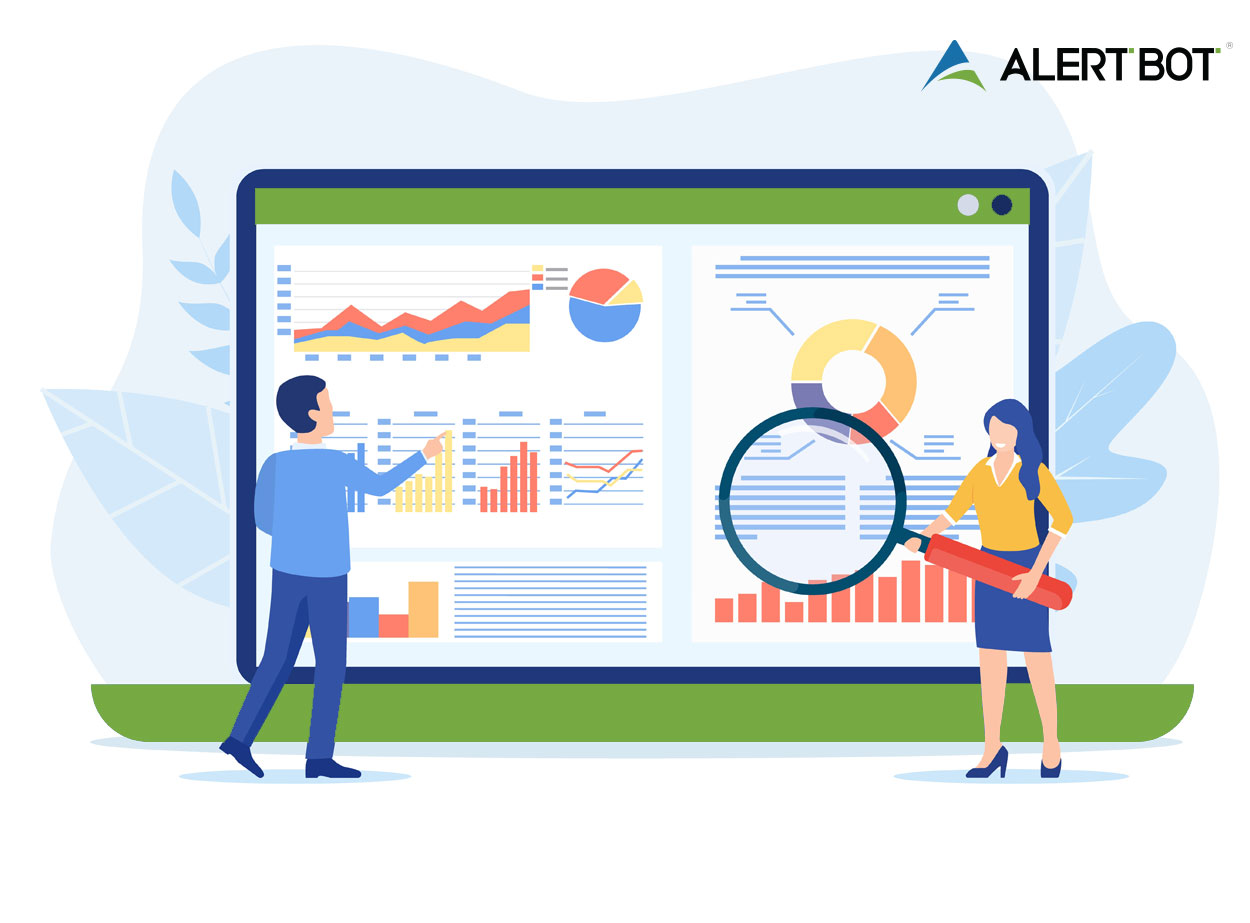
When customer functions like logging in, using shopping carts or search fail, visitors may defect to one of your competitors. Synthetic transaction tests easily simulate these types of transactions, enabling you to be certain everything is working as it should and that recent software updates have not broken existing functionality. It is much easier to measure performance when you have a baseline. Synthetic monitoring applications, like AlertBot, have user-friendly portals that provide charts, graphs and reports to highlight deviations from the baseline. They make it that much easier to keep your finger on the pulse. - Error sources and reporting: If there is a problem, where is it?
Synthetic monitoring is a powerful predictive tool. According to one leading industry professional, “Synthetic monitoring doesn’t rely on complex predictive algorithms, it doesn’t take a data scientist with a Ph.D to interpret the results, and it doesn’t require additional spending on IT infrastructure. What it does is predict, to a fair degree of accuracy, how your application will perform in which geographies and isolate the root cause of any detected bottlenecks.” - Downtime and outages: Is your application online and accessible?
While synthetic monitoring is traditionally associated with customer-facing websites, it is platform-agnostic and works just as well monitoring SaaS applications. For instance, it can identify what is competing for resources on your network. Resource hogging applications can degrade the overall performance of your service.
5 top advantages of using synthetic monitoring for SaaS applications
- Quickly assess the overall impact and performance of new features on your system
- Monitor multiple cloud centers simultaneously as well as performance in scenarios where traffic is ramping up aggressively
- Validate base-line performance prior to signing off on an SLA with your provider and objectively monitor it after
- Utilize automatically generated diagnostics and reports that enable you to share information and collaborate with your SaaS provider
- Determine if a cloud service is down and exactly who is affected in what geographical locations
Synthetic monitoring for SaaS is growing in leaps and bounds
According to a MarketsandMarkets.com report, “Synthetic Monitoring Market by Monitoring Type (paywall),” the enterprise synthetic application monitoring market size is expected to grow $919.2 million in 2016 to $2,109.7 million by 2021, at a CAGR of 18.1 percent from 2016 to 2021. The report predicts that “SaaS application monitoring is expected to gain maximum traction during the forecast period.” Don’t get left behind.
Conclusion
A 451 Research study found that the rapid growth of public cloud services and network virtualization has often outstripped management and monitoring capabilities, creating “blind spots” in network operations’ ability to maintain internal uptime and performance benchmarks. If you only recently climbed on the SaaS bandwagon, it is likely that your existing system monitoring tools are not cloud-friendly.
You may need some help from the experts to help you keep your finger on the pulse of your new SaaS application. Mosey along to AlertBot for more information about a holistic synthetic monitoring solution.